
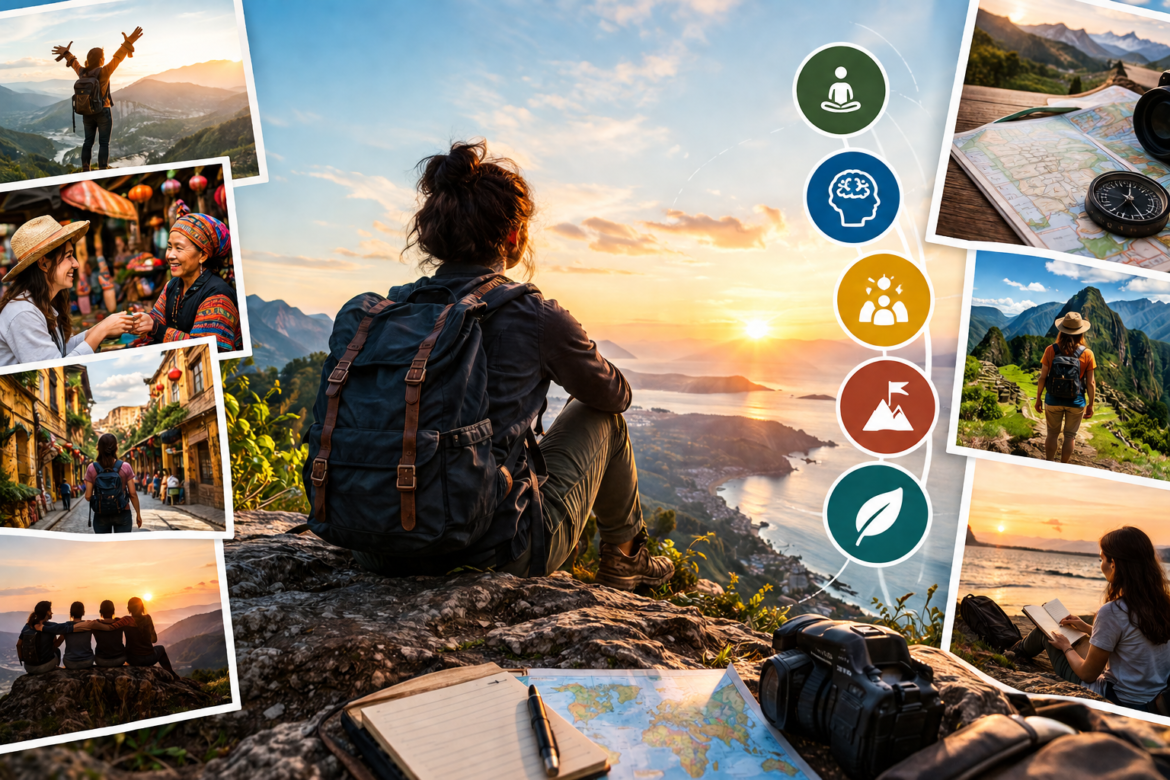
Yes, travel absolutely contributes to personal development and self-growth. Stepping outside your familiar environment challenges your assumptions, builds resilience, and expands your sense of what’s possible. Whether you’re backpacking through a new country, taking a solo city break, or immersing yourself in a different culture, travel pushes you to adapt, learn, and reflect in ways daily life often doesn’t.
How Travel Builds Self-Awareness and Confidence
Travel strips away routine and hands you unfamiliar situations that require quick thinking, patience, and problem-solving. Navigating a foreign transit system, ordering food in a language you don’t speak, or handling a missed connection teaches you to stay calm under pressure. These small wins add up. Each time you figure something out on your own, your self-trust grows.
Being away from home also gives you space to reflect. Without the usual distractions and social expectations, you start noticing your habits, fears, and desires more clearly. Many travelers report returning with a stronger sense of identity and purpose because they’ve seen themselves handle challenges they didn’t expect.
Solo travel, in particular, accelerates this process. When you’re solely responsible for your plans and safety, you learn to rely on your judgment. You discover what you truly enjoy, not what you think you should enjoy. That clarity is a cornerstone of personal growth.
Cultural Immersion and Expanded Perspectives
One of the most powerful ways travel fosters growth is through cultural immersion. Meeting people with different values, traditions, and life stories stretches your empathy and reduces prejudice. You begin to see that your way isn’t the only way—and often not even the best way for everyone.
This exposure rewires how you think about success, happiness, and community. You might witness a culture that prioritizes family over career, or one that celebrates slow living in a world obsessed with speed. These contrasts invite you to question your own priorities and consider changes that align better with your values.
Language learning, even at a basic level, deepens this effect. Trying to communicate across language barriers humbles you and builds patience. It also opens doors to more authentic interactions, which often lead to the most memorable and meaningful travel experiences.
Resilience, Adaptability, and Life Skills
Travel is a masterclass in adaptability. Plans change. Flights get delayed. Weather ruins hikes. Instead of crumbling, you learn to pivot. You find alternative routes, new accommodations, or unexpected activities that turn a “ruined” day into a highlight.
This resilience doesn’t stay on the road. It transfers to work, relationships, and personal goals. People who travel regularly often report feeling more capable of handling stress and uncertainty back home. They’ve practiced flexibility so much that it becomes second nature.
Travel also sharpens practical life skills. Budgeting, negotiating, reading maps, managing time across time zones—these are all real-world competencies that build confidence. You learn to pack light, prioritize essentials, and make decisions with limited information. These skills translate into better organization and decision-making in everyday life.
The Role of Discomfort in Growth
Growth rarely happens in comfort zones, and travel is full of controlled discomfort. Sleeping in a hostel dorm, eating street food with unknown ingredients, or hiking a trail that pushes your limits—all of these create small, manageable stressors that train your brain to handle bigger challenges.
Discomfort also forces presence. When you’re navigating a bustling market in Marrakech or trekking through a quiet mountain village, you’re fully engaged. There’s no room for autopilot. This heightened awareness makes experiences more vivid and lessons more sticky.
Over time, you start to see discomfort not as something to avoid, but as a signal that you’re growing. That mindset shift is transformative. It makes you more willing to take risks, try new things, and embrace change in all areas of life.
Social Skills and Emotional Intelligence
Travel puts you in constant contact with strangers—fellow travelers, locals, guides, hosts. Reading social cues, building rapport quickly, and navigating cultural norms sharpen your emotional intelligence. You learn to listen more, judge less, and connect across differences.
These interactions also teach you about boundaries and assertiveness. Saying no to a pushy vendor, asking for help when lost, or setting expectations with a tour group—all of these build communication muscles. You become more comfortable expressing needs and respecting others’ limits.
Group travel, meanwhile, hones teamwork and compromise. Coordinating itineraries, splitting costs, and respecting different travel styles require diplomacy. These are the same skills that make you a better colleague, partner, and friend.
Reflection and Long-Term Impact
The growth from travel doesn’t always hit mid-trip. Often, it crystallizes afterward, during reflection. Journaling, photo reviewing, or simply recounting stories to friends helps you process what you’ve learned. You start to see patterns: where you were brave, where you hesitated, what surprised you, what changed.
This reflection turns experiences into insights. A chaotic train ride becomes a lesson in patience. A kind stranger’s help becomes a reminder of human goodness. Over time, these insights shape your worldview and guide your choices.
Many travelers also return with renewed motivation. Seeing how others live—sometimes with less but more joy—inspires lifestyle changes. You might declutter, pursue a passion project, or prioritize experiences over possessions. Travel doesn’t just show you new places; it shows you new possibilities for your life.
Making Travel Work for Your Growth
To maximize personal development through travel, intentionality helps. Choose destinations or activities that stretch you slightly beyond your comfort zone. If you’re shy, try solo travel or join group tours where you’ll meet new people. If you’re a planner, leave some days unstructured to practice spontaneity.
Build in reflection time. Spend 10 minutes each evening journaling about what surprised you, what challenged you, and what you learned. Ask yourself: How did I handle stress today? What assumption did I question? What will I take home with me?
Finally, stay open. Growth happens when you’re willing to be wrong, to be uncomfortable, and to be changed. Travel offers endless opportunities for exactly that.
Every Journey Holds Lessons
Travel isn’t just about ticking destinations off a list. It’s a catalyst for becoming a more aware, adaptable, and empathetic version of yourself. Every journey holds lessons—if you’re willing to pay attention. So pack your bag, step out the door, and let the road teach you what you’re capable of.